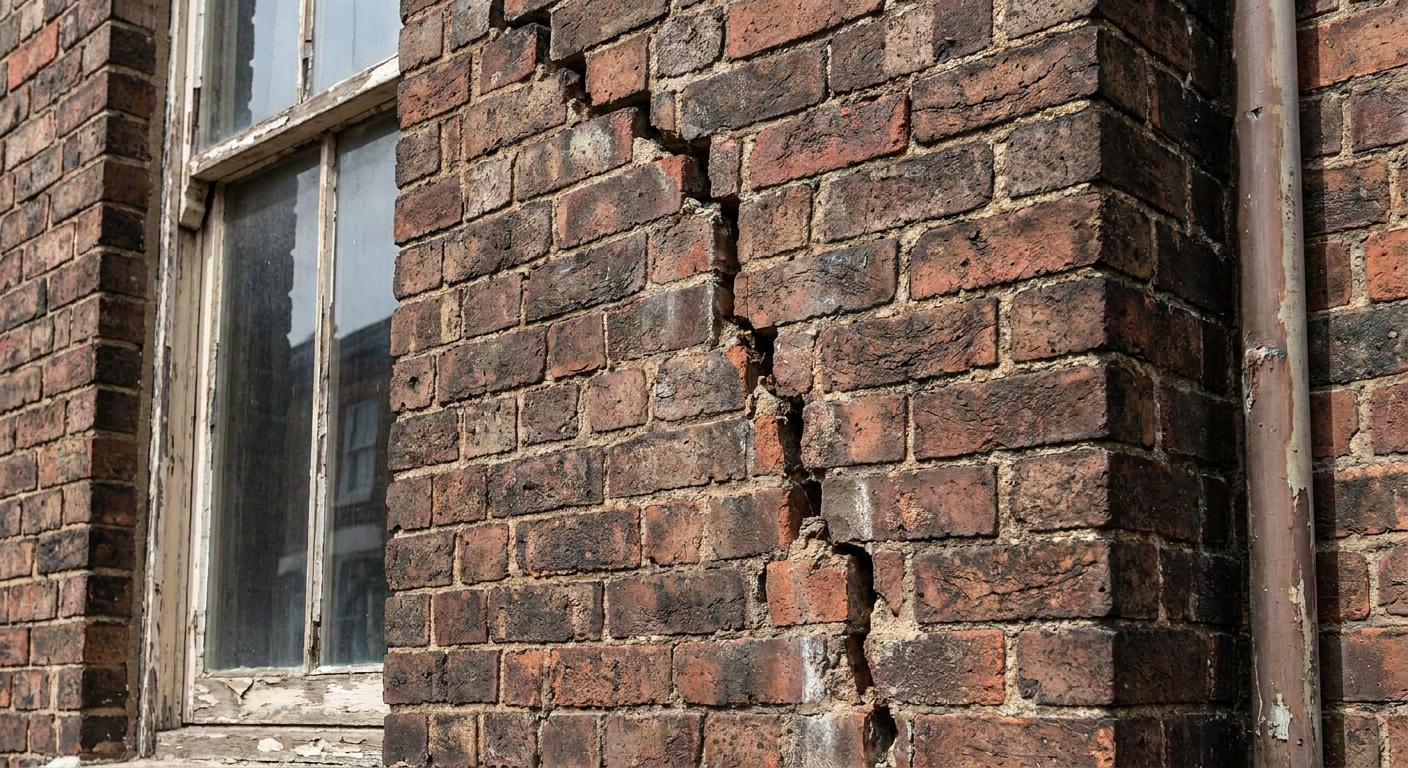
Trees, clay and drains in Leeds
Movement in a wall or floor often traces back to one of three things in Leeds: a nearby tree drawing moisture from clay soil, seasonal shrinkage of that same clay, or a leaking drain softening the ground beneath your foundations. These are especially common in older parts of Roundhay with mature gardens, inner-city terraces with shared drainage, and suburbs built on boulder clay like Alwoodley or Adel.
Not every crack means serious trouble, but if you see fresh diagonal cracks wider than 3mm, doors sticking for no obvious reason, or wallpaper tearing at corners, it’s worth checking what’s underneath.
What usually causes movement here
Leeds sits on variable ground, much of it glacial boulder clay that expands when wet and shrinks in dry spells. In areas like Headingley, Chapel Allerton or Moortown, large trees, especially oaks, poplars or willows, can pull enough water from this clay during summer to cause noticeable settlement. A specialist distinguishes between harmless seasonal movement and something needing repair by checking crack patterns, recent weather, tree proximity and drain condition.
What happens when you ask for help
The specialist who takes your enquiry will arrange a site visit to assess the likely cause.
Tree root assessment
They measure distance from large trees to your property and check species type, as some draw far more water than others.
Drain testing
Where a leak is suspected, they may recommend a CCTV drain survey to locate fractures or displaced joints under the building.
Soil and crack mapping
They record crack width, direction and location, then correlate this with local soil type and recent rainfall patterns.
Monitoring if needed
If the movement appears recent or ongoing, they might install tell-tale pins or digital monitors for several months before deciding on repair.

What the investigation looks like on site
A specialist starts outside, walking the perimeter to note tree types, distances and any visible ground movement such as dips or heave near paths. They’ll check manhole covers for signs of blockage or overflow and look for damp patches on external walls that could signal a hidden leak.
Inside, they examine cracks in relation to windows, corners and service entries. On clay-heavy sites like those in Wetherby or Boston Spa, they pay close attention to whether cracks open in summer and close in winter, a classic sign of seasonal clay movement rather than structural failure.
How you know the assessment is thorough
The specialist uses consistent, observable indicators, not guesswork, to reach a conclusion. Their report includes photographs, measurements and references to local ground conditions so you can understand the reasoning.
Local ground knowledge
Drain history checks
Clear cause analysis
They explain whether movement is likely due to a tree, a drain, natural clay behaviour, or a combination, and what that means for repair options.
Questions we hear in Leeds
Do all trees near my house cause subsidence?
No. Distance, species and soil type matter. A small ornamental tree 15 metres away on sandy ground is unlikely to affect your foundations, but a large willow within 5 metres on clay could.
Can a broken drain really make my house sink?
Yes. Water escaping from a cracked or displaced drainpipe can erode fine particles from the soil beneath your footings, creating a void that leads to localised settlement.
Is seasonal cracking something to worry about?
Minor cracks that open in dry summers and close in wet winters are often just the clay expanding and contracting. A specialist can tell you whether it’s within normal limits.
Will my buildings insurance cover this?
Some policies cover subsidence caused by tree roots or leaking drains, but not routine maintenance issues. Check your policy wording or speak to your insurer, they may ask for a specialist’s report.
Other pages that may help
About
Advice
What Happens During a Subsidence Survey
What to expect when a specialist surveys your home for subsidence.
Underpinning or Resin Injection: How the Repair Is Chosen
How a specialist chooses the right repair for your home’s movement.
Advice and guides
Is It Subsidence, or Just an Old Crack?
What different crack patterns mean and when to call a specialist.
They look for tell-tale signs that point to trees, clay behaviour or drainage issues, and rule out other possibilities.
What you have read here is general background on subsidence rather than guidance about your own building, and only an inspection can say what holds true at your address.
Get a clear explanation
A specialist covering your part of Leeds will inspect the property and explain what’s happening, with no obligation to proceed.