What happens during a subsidence survey
A subsidence survey is a methodical inspection to find out whether your home’s movement is serious or part of normal settling. It does not mean underpinning is needed, many cracks are harmless, and the survey helps rule out worst-case assumptions.
The specialist who takes your enquiry will look at patterns of cracking, check levels across floors and walls, and often return after a few months to see if anything has changed. Their aim is to identify the cause, not jump to a repair.
Movement isn’t always subsidence
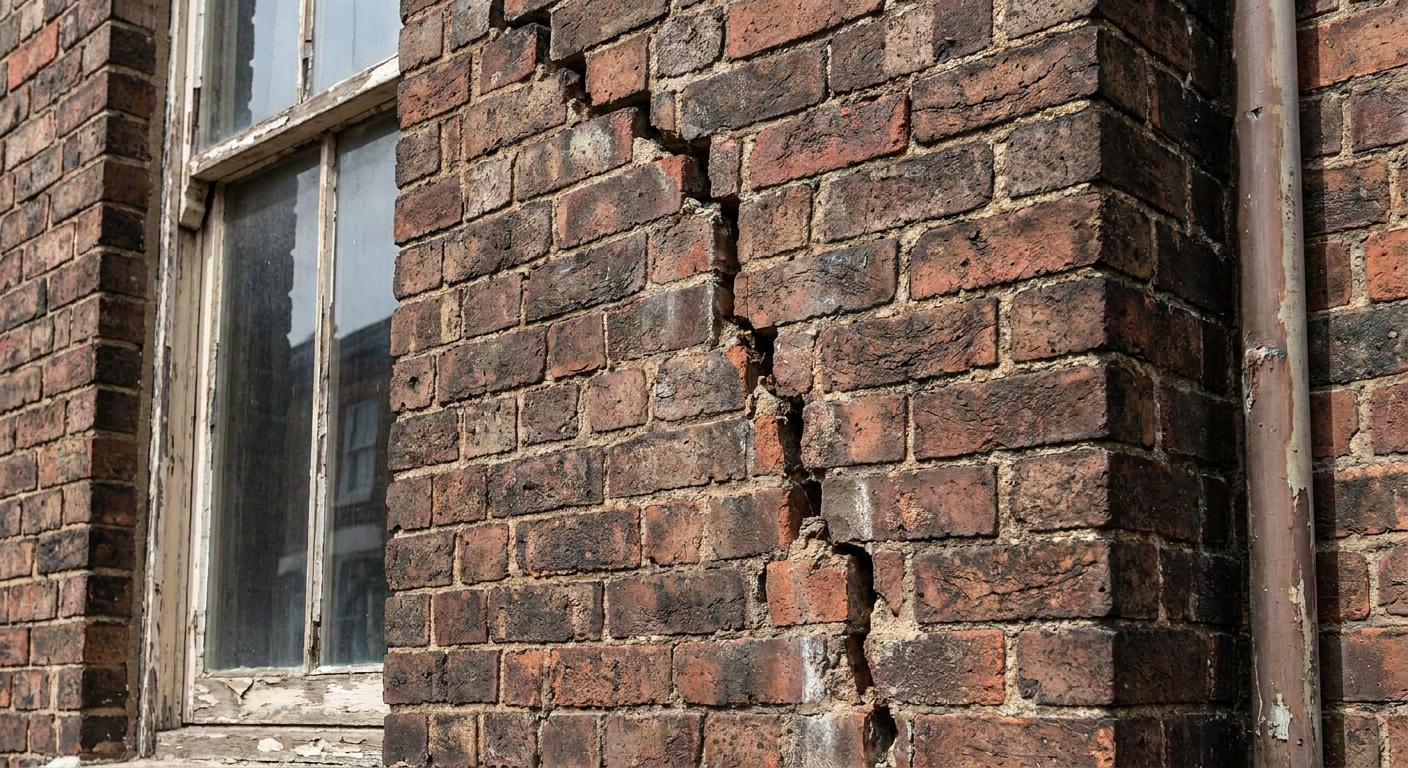
Cracks appear in many older homes across Leeds for reasons unrelated to foundation failure, shrinkage in plaster, thermal expansion, or minor settlement. A diagonal crack near a window might look alarming but could simply reflect seasonal drying of internal finishes.
True subsidence usually shows as widening cracks over time, often aligned with changes in floor levels or sticking doors and windows. The survey separates these signs from cosmetic issues so you know what, if anything, needs addressing.
Steps in a typical subsidence survey
The specialist follows a consistent sequence to gather evidence without causing unnecessary disruption.
Initial visual inspection
The specialist examines all visible cracks, noting their width, direction and location, especially around openings, corners and junctions between extensions and original builds.
Installation of crack monitors
Small devices are fixed across selected cracks to measure any further movement over weeks or months. This data shows whether the problem is active or dormant.
Trial pits and soil sampling
Where needed, narrow excavations are dug next to external walls to expose foundations and collect soil samples. This reveals depth, type and moisture content of the ground beneath.
Drainage testing
Levels and laser surveys
Precision instruments measure height differences across floors and sills to detect subtle tilting that isn’t obvious to the eye.

What the specialist is looking for
In Leeds, where clay soils dominate much of the city and surrounding towns, seasonal shrinkage and swelling can mimic subsidence. The specialist checks whether cracks follow classic subsidence patterns, widest at the top, tapering downward, or whether they’re random and hairline, suggesting surface-level causes.
They also consider local factors: mature trees near older terraces in Headingley or Roundhay may extract enough moisture to affect foundations, while leaking drains behind back-to-back houses in Hunslet or Kirkstall can soften underlying ground. These clues help distinguish true ground movement from other sources of damage.
How conclusions are reached reliably
The specialist builds their assessment on physical evidence gathered over time, not assumptions. Their report reflects what was observed, measured and tested, not speculation.
Repeated measurements
Crack monitors are read on multiple visits to confirm whether movement has stabilised or is ongoing.
Soil and root analysis
Samples are examined for composition, moisture and organic content to assess how tree roots or weather may be influencing ground stability.
Drain integrity checks
Leaking drains are a frequent culprit in Leeds suburbs; confirming or ruling this out avoids unnecessary foundation work.
Level comparisons
Laser levels establish a baseline across the property, showing whether one corner has dropped relative to others.
Before you get in touch
Will the survey damage my garden or driveway?
Trial pits are narrow and reinstated afterwards. Most surveys cause minimal disruption, and the specialist will discuss access beforehand.
How long does the whole process take?
The initial visit may take a few hours. If crack monitors are installed, a second visit typically occurs 6–12 weeks later to check for movement.
Can I send the report to my insurer?
Yes. The written report includes findings and photographs, which you may choose to submit with a buildings insurance claim.
Do I need to be present for the survey?
It’s helpful but not always essential. The specialist will need access to affected rooms and possibly external walls.
Worth reading next
What we do
Advice
Underpinning or Resin Injection: How the Repair Is Chosen
How a specialist chooses the right repair for your home’s movement.
Advice and guides
Is It Subsidence, or Just an Old Crack?
What different crack patterns mean and when to call a specialist.
Subsidence and Your Buildings Insurance
What your buildings insurance may cover for subsidence in Leeds.
Trees, Clay Soils and Leaking Drains
What to check when your home moves near trees or old drains.
They begin with a visual inspection and may install crack monitors before returning weeks or months later.
What you have read here is general background on subsidence rather than guidance about your own building, and only an inspection can say what holds true at your address.
Know what comes next
You’ll receive a clear explanation of the findings and options, with no obligation to proceed.