
Beeston, Leeds
Subsidence in Beeston: floors, drains and cracks
Send the details of what you have noticed at home. A specialist will read them and tell you whether the signs point to ground movement or something else. There is no fee for this first look.
What you might be seeing at home
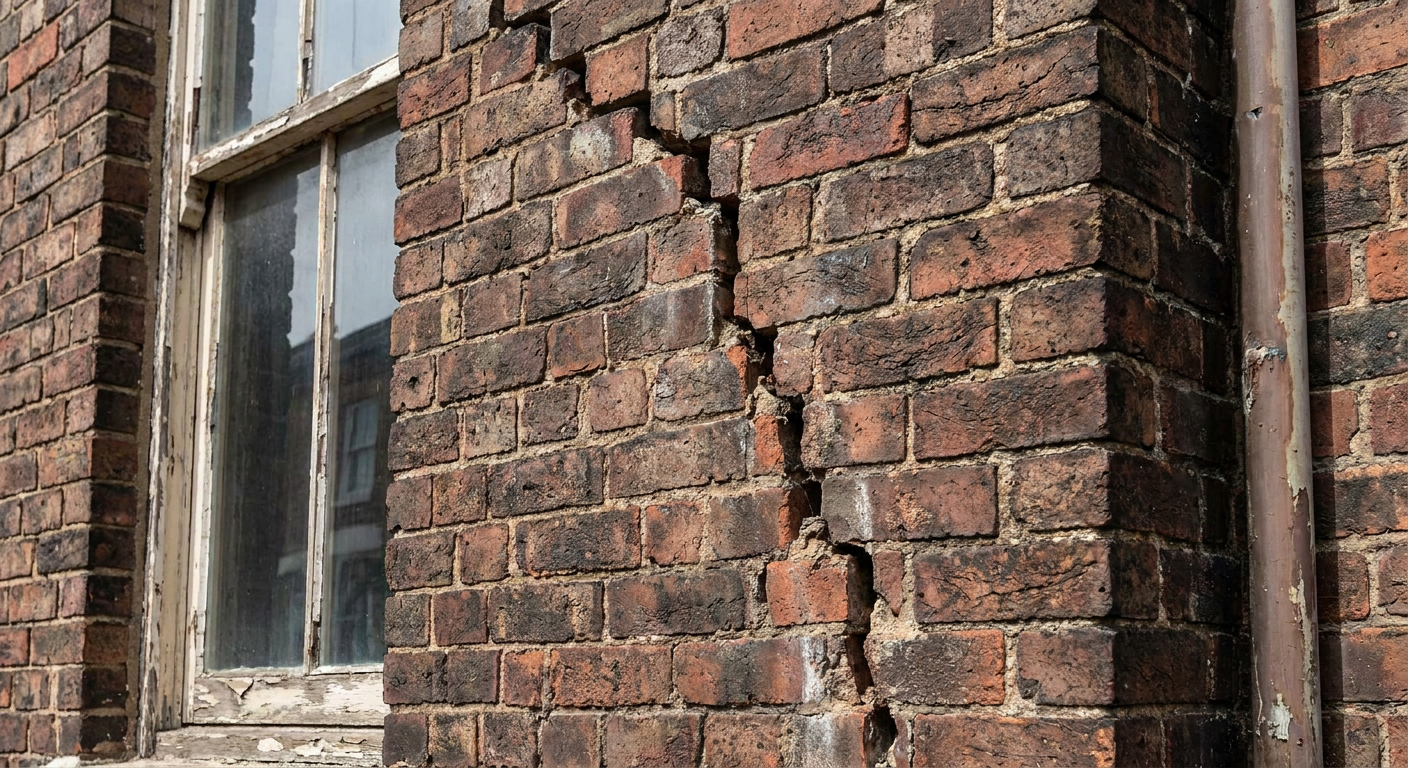
Movement shows itself slowly. In Beeston LS11 house cracks often appear where walls meet ceilings, or doors start sticking in frames that used to shut easily. Industrial clay soils combined with Victorian brickwork terrace foundations require monitoring because the ground shrinks and swells with the seasons.
- 1
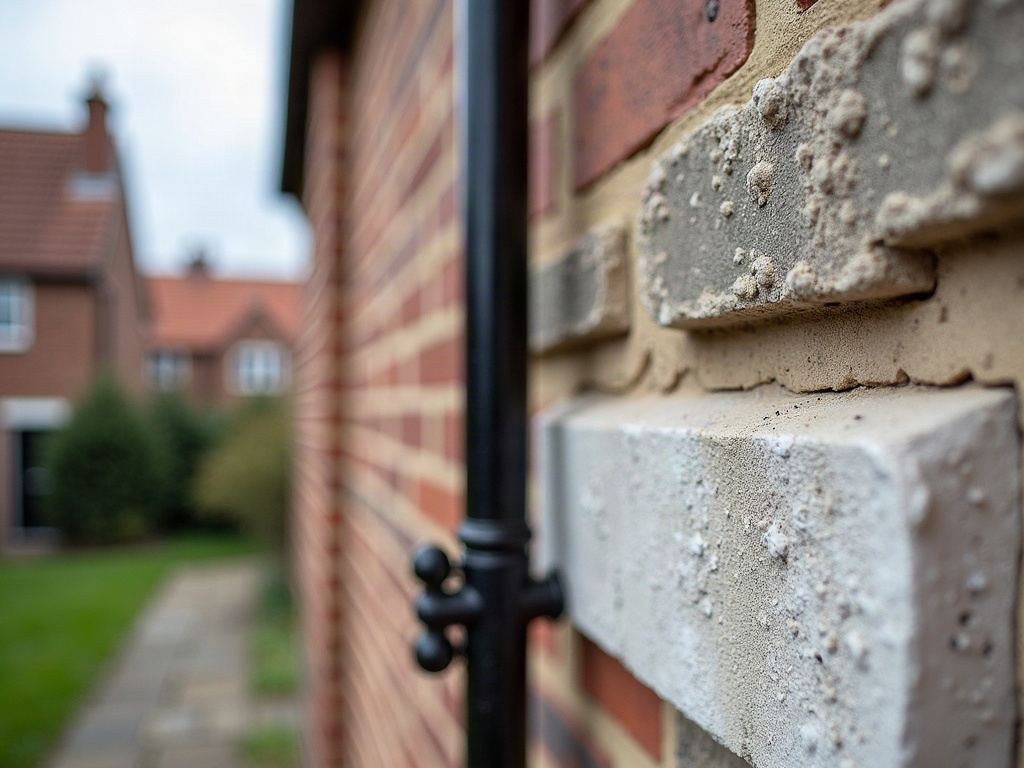
Diagonal cracks near openings
A crack running from the corner of a window or door frame toward the ceiling can indicate uneven settlement beneath the wall.
- 2
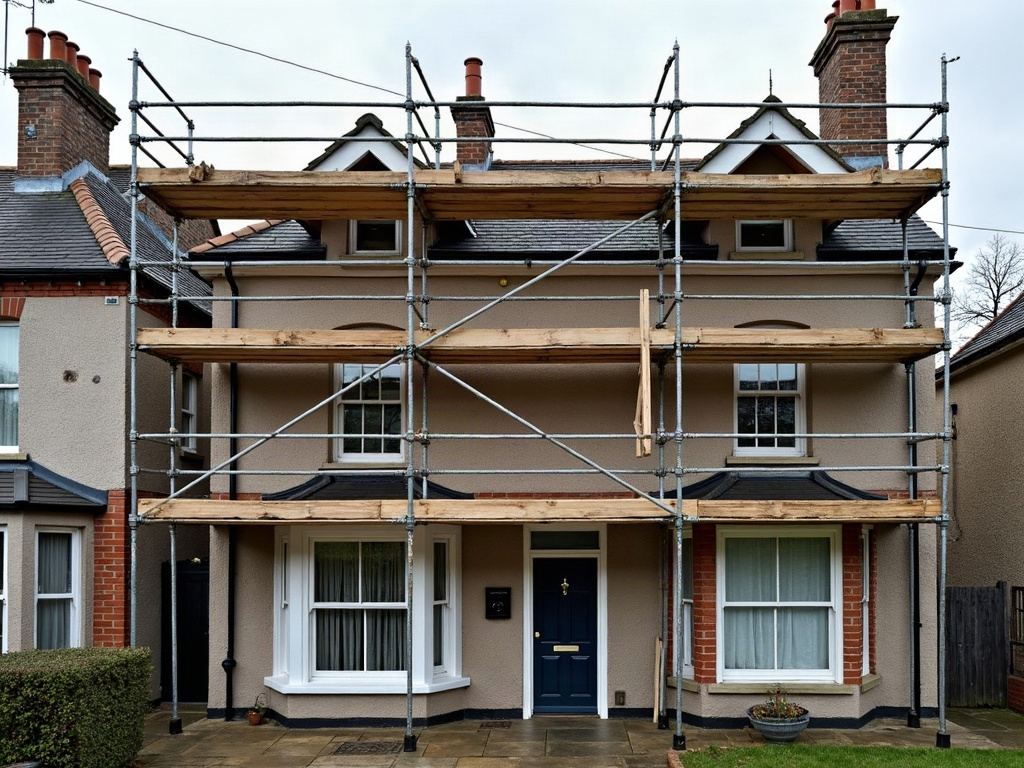
Floors sloping to the rear
Sloping floors in a terraced house sometimes point to soft ground under the back extension or old workings below.
- 3
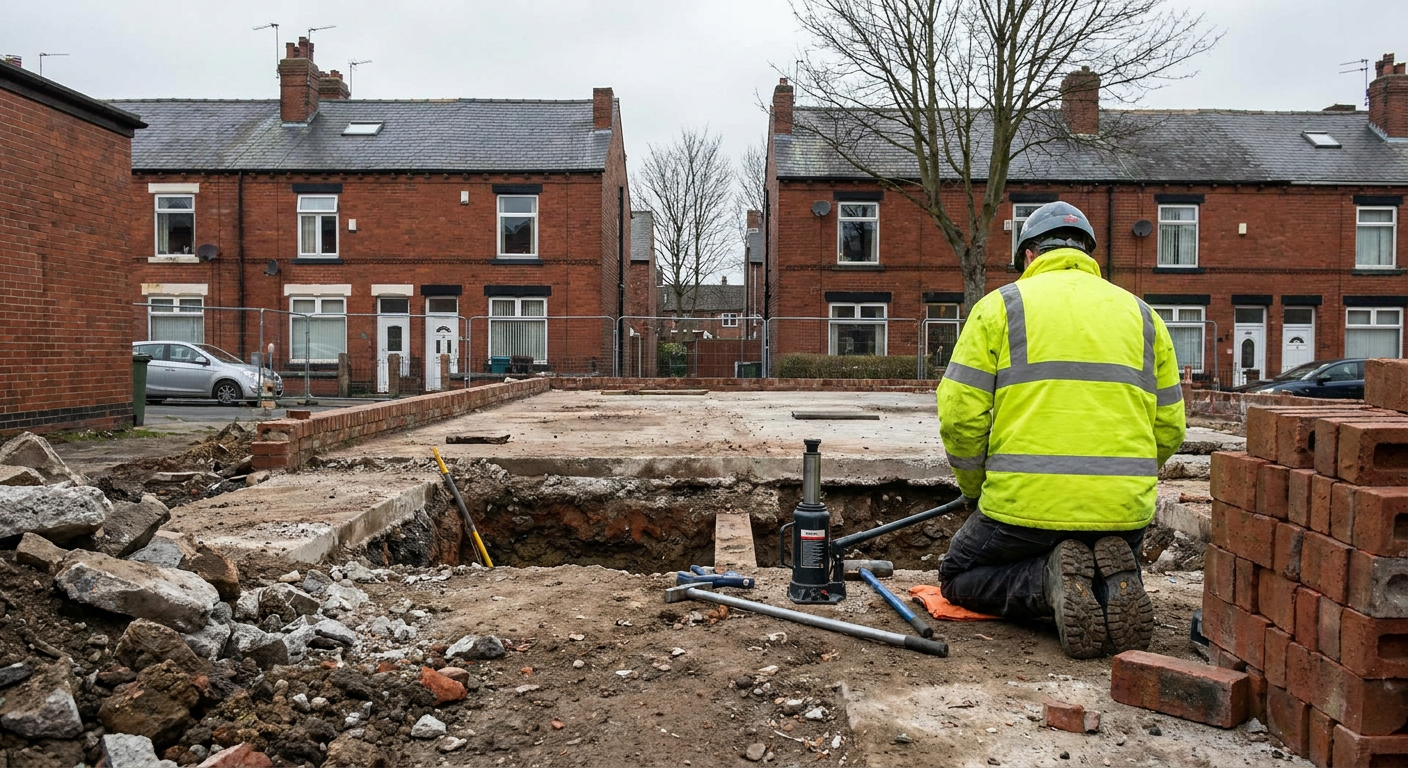
Damp smell near skirting boards
A persistent musty scent alongside new cracking may mean a leaking drain is washing soil away from shallow foundations.
- 4
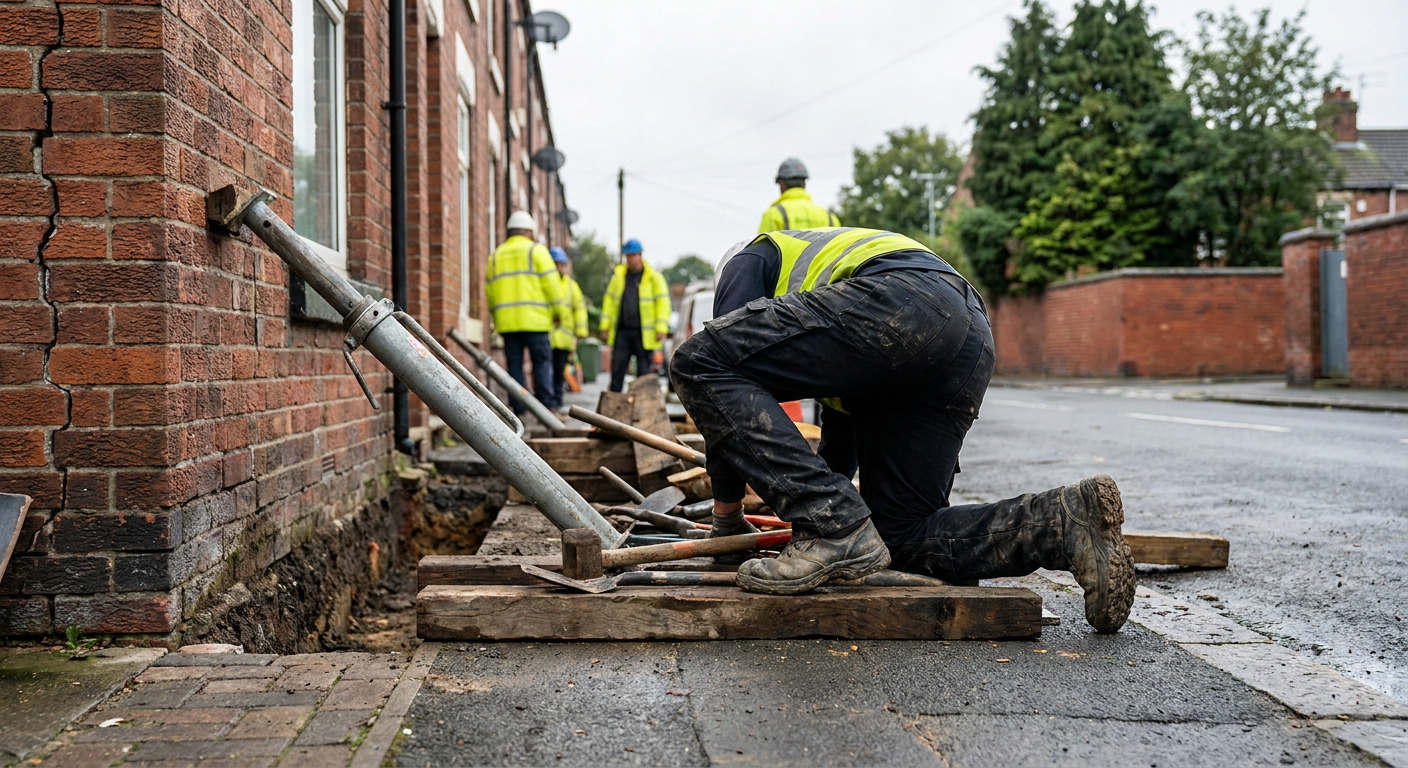
Gaps around external pipes
Where pipework enters the brickwork, widening gaps suggest the wall has shifted independently of the pipe run.
Common causes locally
Why houses move in south Leeds
Mining subsidence in south Leeds remains a factor, but water escape and clay shrinkage cause many of the problems seen on these streets.
- Historic coal workings Old shafts and tunnels sit beneath parts of the area. If they collapse or compress, the ground above drops. A cracked brickwork terrace survey checks for this pattern of movement.
- Escaping water A drain leak causing cracks is common where Victorian clay pipes have fractured. The escaping water washes fine soil particles away, leaving voids under the footing.
- Clay shrinkage The industrial clay soils here lose volume in dry summers. Shallow footings on older terraces move with the moisture change, opening joints in the mortar.
- Tree roots Roots seeking moisture draw water from the clay beneath foundations. This localized drying causes one part of the house to settle faster than another.
- Floor slab failure Concrete floors laid directly on fill material can sink as the fill compacts over decades. Floor settlement repair in Leeds addresses both the slab and the ground below it.
Subsidence services available in Beeston
Older terraces and variable ground conditions mean each home needs an approach suited to its specific street and soil profile.
-
Subsidence help in Beeston
Subsidence help in Beeston starts with a structural assessment. The specialist examines the cracking, measures any slope in the floors, and reviews local mining records to establish whether historic workings are responsible for the movement.
-
Underpinning in Beeston
Underpinning in Beeston requires care where houses share party walls. The specialist excavates in short bays to avoid disturbing the neighbour's foundation, pouring new concrete below the existing footing to reach stable ground.
-
Concrete cracking in Beeston
For concrete cracking in Beeston, the specialist inspects slabs in kitchens, yards and garages. They determine whether the crack stems from surface wear or from the same ground movement affecting the main walls.
-
resin injection in Beeston
Resin injection in Beeston suits terraced houses where access is tight. The specialist drills small holes through the floor or outside wall and pumps expanding resin into the voids below, compacting loose soil without heavy excavation.
-
screw piling in Beeston
Screw piling in Beeston works well in small back yards. The specialist uses compact machinery to drive steel piles through made ground down to a load-bearing stratum, limiting vibration and disruption to neighbouring properties.
Areas covered around Leeds
Enquiries are taken from homeowners across the city and its surrounding towns. Each location has its own ground conditions, building styles and history of extraction that shape how movement presents itself.
If your street is not listed, send an enquiry anyway. Coverage extends throughout the wider region.
Tell us what you have noticed
The details you provide go to a specialist who deals with ground movement. They will contact you to discuss what the signs might mean. Sending an enquiry does not commit you to any work or cost.
- No obligation
- Free initial assessment
- Local specialists