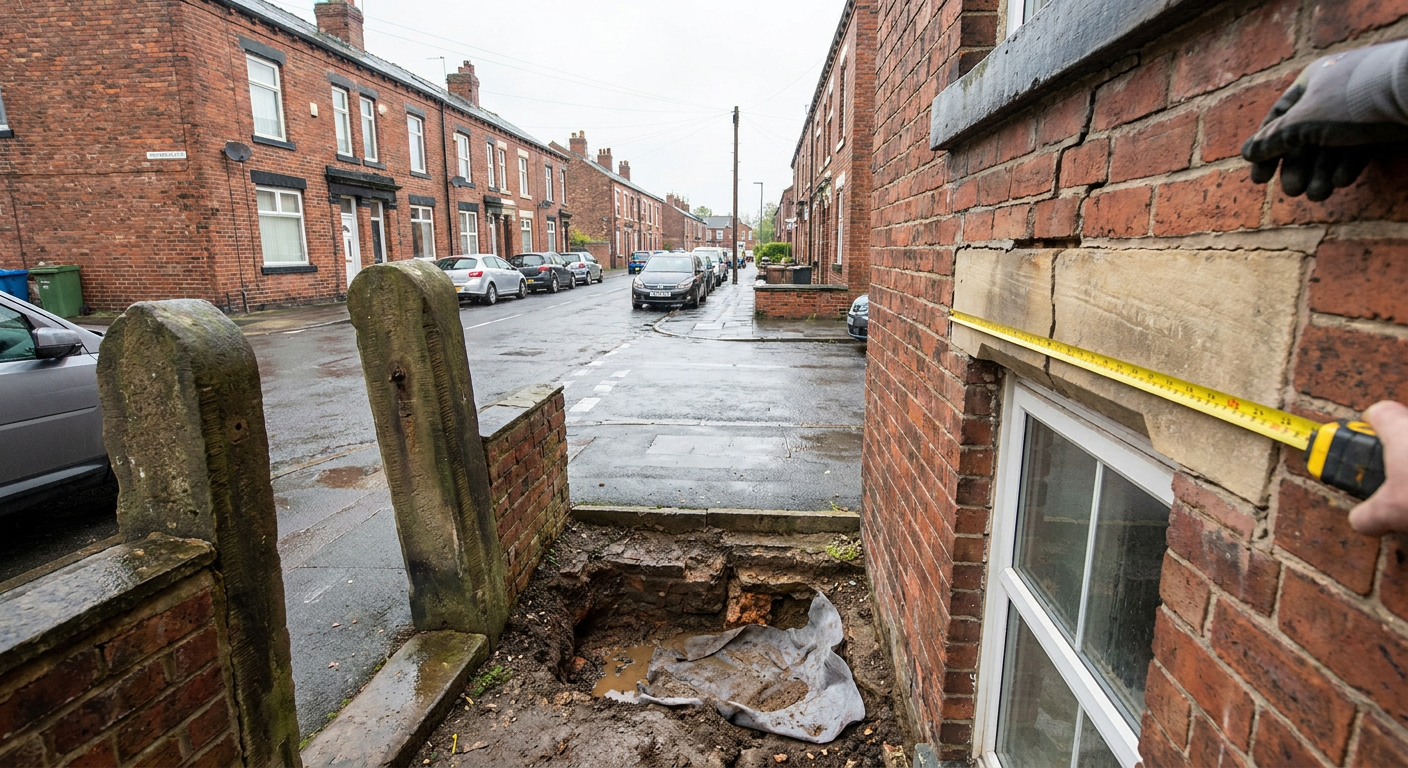
Leafy Leeds suburbs
Tree roots and house cracks
If you suspect a nearby tree is causing cracks in your home, an initial enquiry costs nothing. A specialist will assess whether root activity or clay movement is involved and what might help.
How trees affect foundations
In parts of Leeds with clay soil, moisture levels change with the seasons. Trees draw water from the ground, which can cause clay to shrink during dry periods. This shrinkage may lead to foundation movement and cracking in nearby buildings.
The effect depends on the tree species, its size, distance from the house and local soil conditions. Not all cracks near trees are due to root activity. Some result from natural clay movement unrelated to vegetation.
Clay shrinkage and swelling cycles
Clay soils expand when wet and contract when dry. Over years, repeated cycles can lead to gradual foundation shifts. In summer, tree roots intensify drying, deepening the shrinkage. In winter, rainfall rehydrates the soil, but not always evenly.
This uneven movement stresses brickwork and render, often showing as diagonal cracks around windows or doors. Older homes with shallow foundations are more vulnerable. Newer properties may have deeper footings that resist minor shifts.
Why felling isn't always the fix
Removing a tree may seem like a quick solution, but it can worsen the problem. When a mature tree is felled, the soil it once dried out begins to reabsorb moisture. This causes the clay to swell, potentially lifting foundations unevenly.
Specialists consider alternatives such as crown reduction, root barriers or controlled pruning. The goal is to balance moisture uptake without triggering rebound heave. Each property needs an individual assessment to determine the safest approach.
Is your crack linked to a tree?
Only a site inspection can confirm the cause. But recognising signs helps decide how soon to seek advice. Early input often leads to simpler, less costly solutions than waiting for worsening damage.
-
Diagonal cracks above windows, worse in summerSoon
Typical of seasonal clay shrinkage, possibly worsened by nearby tree roots drawing moisture.
What to do Enquire for an assessment before the next dry season.
-
Cracks near a large, close-planted treeSoon
Roots may be drying the subsoil, especially if the tree is thirsty like an oak or poplar.
What to do Ask a specialist to evaluate tree proximity and soil type.
-
Cracking after a tree was recently removedToday
Soil rehydration could be causing upward movement (heave), lifting part of the foundation.
What to do Contact a specialist to assess the cracks and tree influence. Early advice helps prevent worsening damage.
This is general guidance only. Sudden or rapidly widening cracks should be checked without delay.
Typical repair costs for tree-related movement
Costs vary widely because every property sits on different ground, with unique tree influences, foundation depths and damage extent. Soil testing, monitoring periods and repair methods all affect the final figure.
-
Monitoring and reporting
£800 to £2,500
Length of monitoring period and number of site visits required.
-
Root barrier installation
£2,000 to £6,000
Depth and length of barrier, plus access constraints on the property.
-
Resin injection stabilisation
£4,000 to £12,000
Volume of resin needed and depth of ground treatment required.
-
£10,000 to £30,000 or more
Extent of foundation affected, ground conditions and access for works.
These are indicative ranges for similar jobs across Leeds. No quotation is given without a site inspection.
Get clear advice for your home
Your details go straight to a subsidence specialist covering Leeds, who holds relevant qualifications in structural investigation. There’s no obligation, and you’ll receive a plain assessment of likely causes and options.
- No cost to enquire
- Local specialists only
- No pushy sales